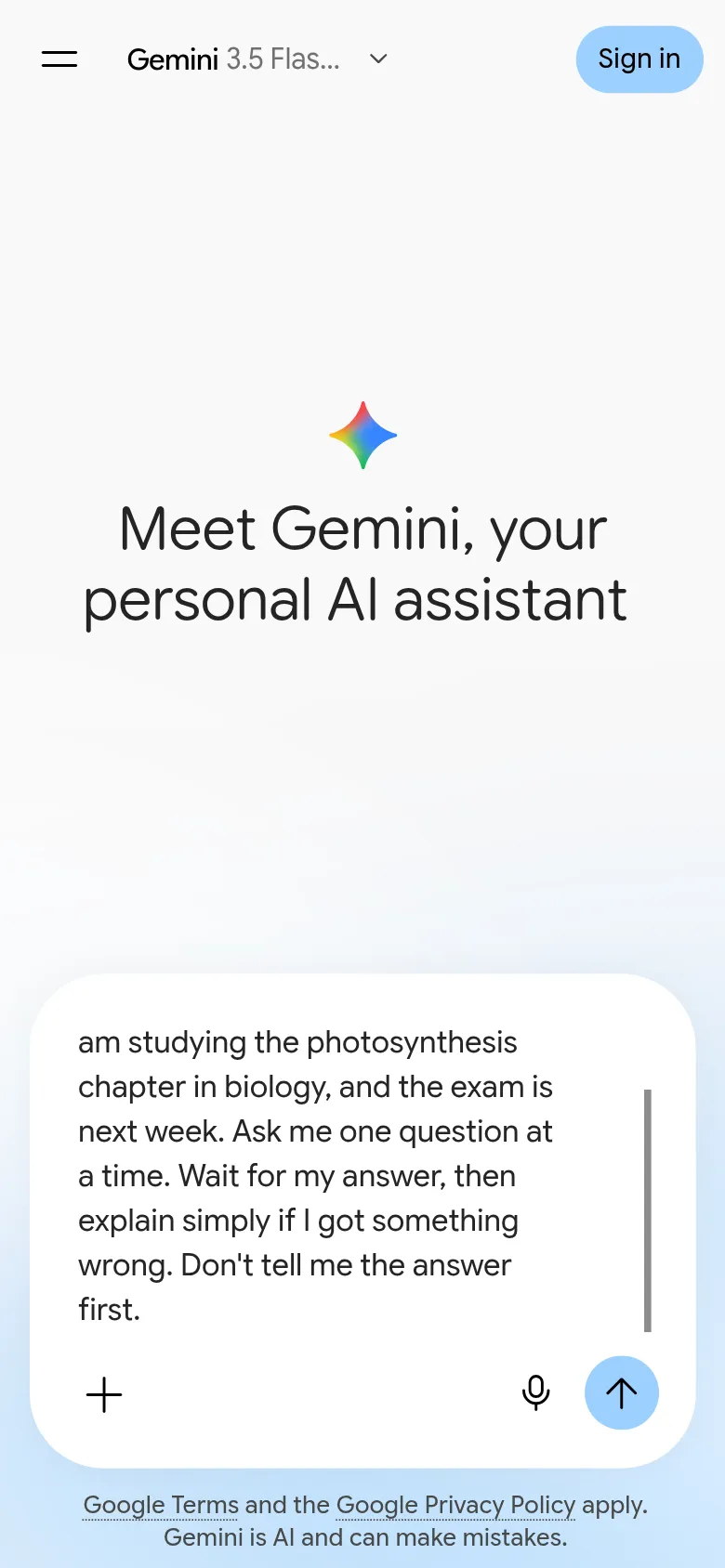
The four parts of a good prompt: persona, task, context, format
You need: ChatGPT (chatgpt.com)
Whatever you type to an AI is a prompt. Google’s prompting guide says that the most useful prompts from its users average about 21 words, while people usually write fewer than nine. In this post we ask the same question two ways and look at the difference.
Step 1: First, ask in one line
Give me a plan for a trip to Cox's Bazar.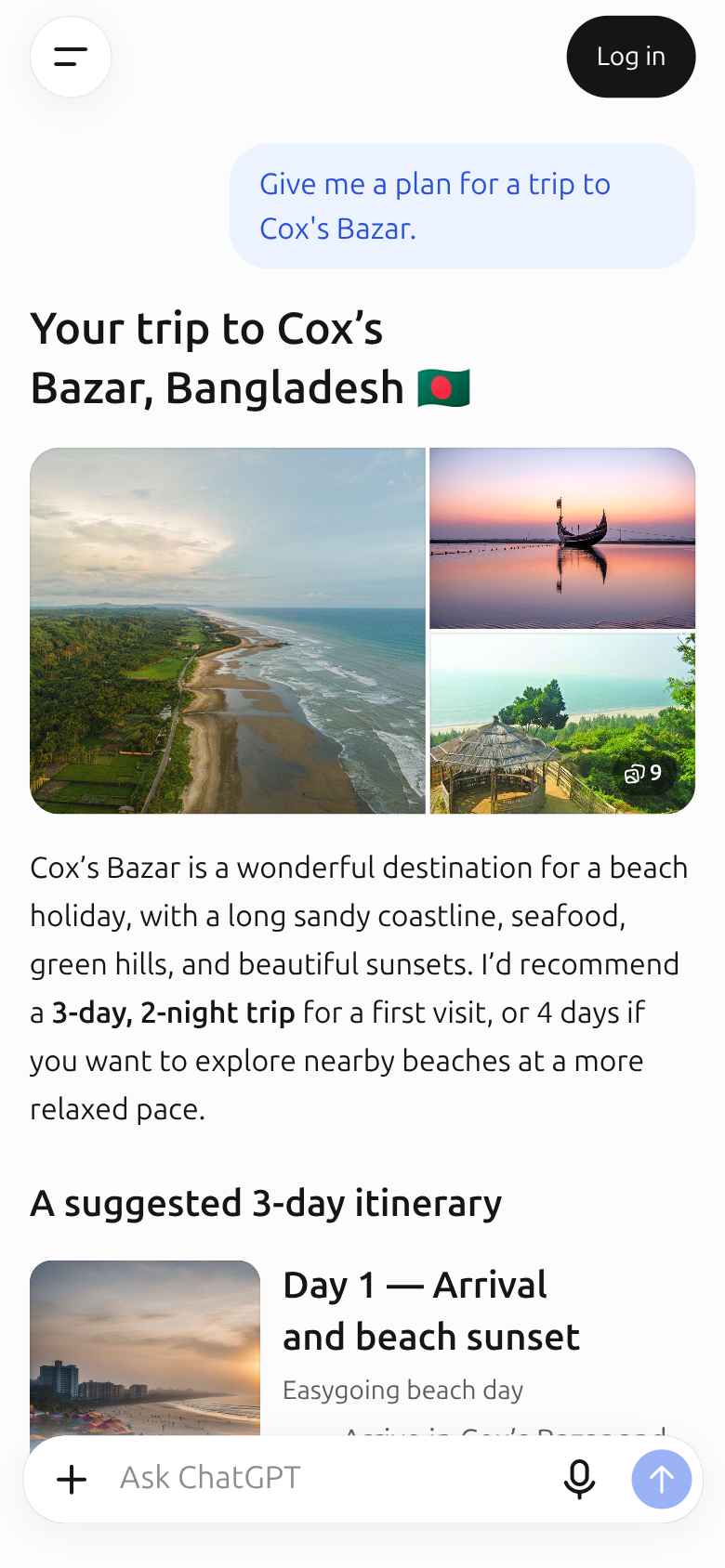
- 1A generic answer, the same for everyone
The answer isn’t bad, but it’s the same for everyone. ChatGPT doesn’t know how many of you are going, whether there are children, or what the budget is. So nothing in it fits your family yet.
Step 2: Write it in four parts
Google’s guide names four parts of a good prompt:
- Persona: who the AI should think like. “You are an experienced travel planner.”
- Task: exactly what to make. “Make a 3-day trip plan to Cox’s Bazar.”
- Context: your situation, which the AI can’t know. How many people, the children’s ages, how you travel, when, the budget, any limits.
- Format: what the answer should look like. “Answer in a table: day, morning, afternoon, evening, estimated cost.”
All together:
You are an experienced travel planner. Make a 3-day trip plan to Cox's Bazar for our family. We are 4: two parents and two children aged 6 and 10. We will go from Dhaka by bus, in December. The budget is 25,000 taka, not counting the bus fare. The children cannot walk very far. Answer in a table: day, morning, afternoon, evening, estimated cost.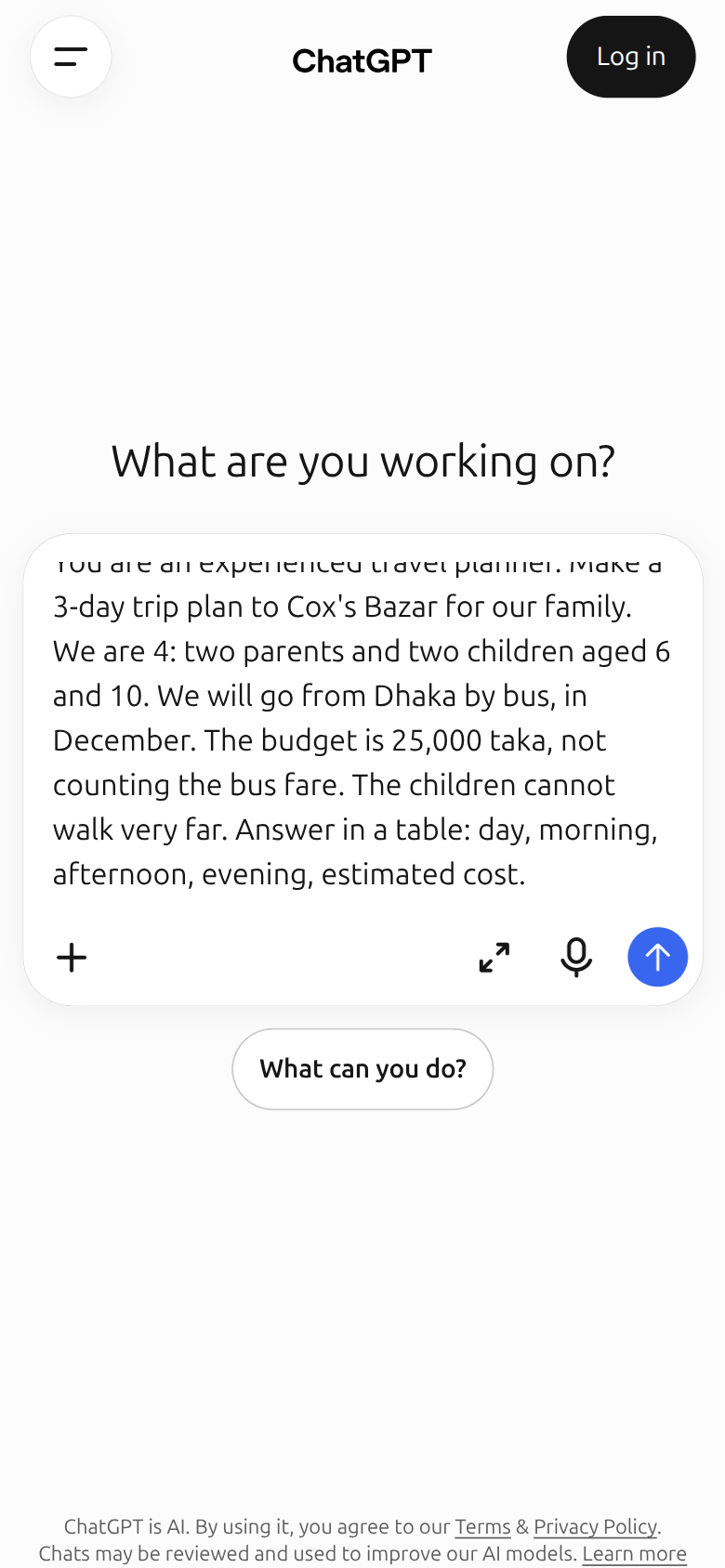
- 1Persona, task, context and format: all four are there
Step 3: Check the answer against your request
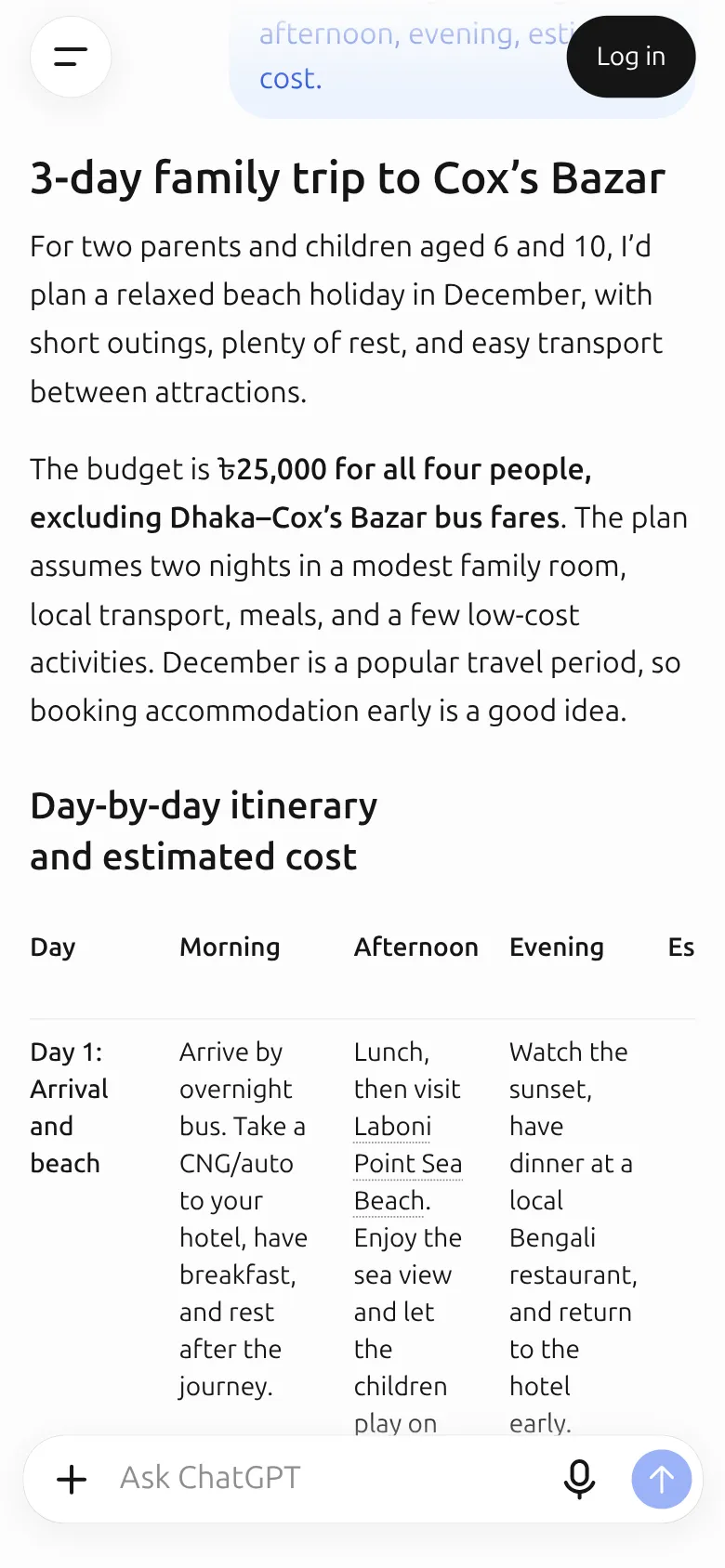
Now the answer fits us. ChatGPT starts by restating our situation (two parents, children aged 6 and 10, December, 25,000 taka without bus fares), then gives the table we asked for, with short outings because the children can’t walk far.
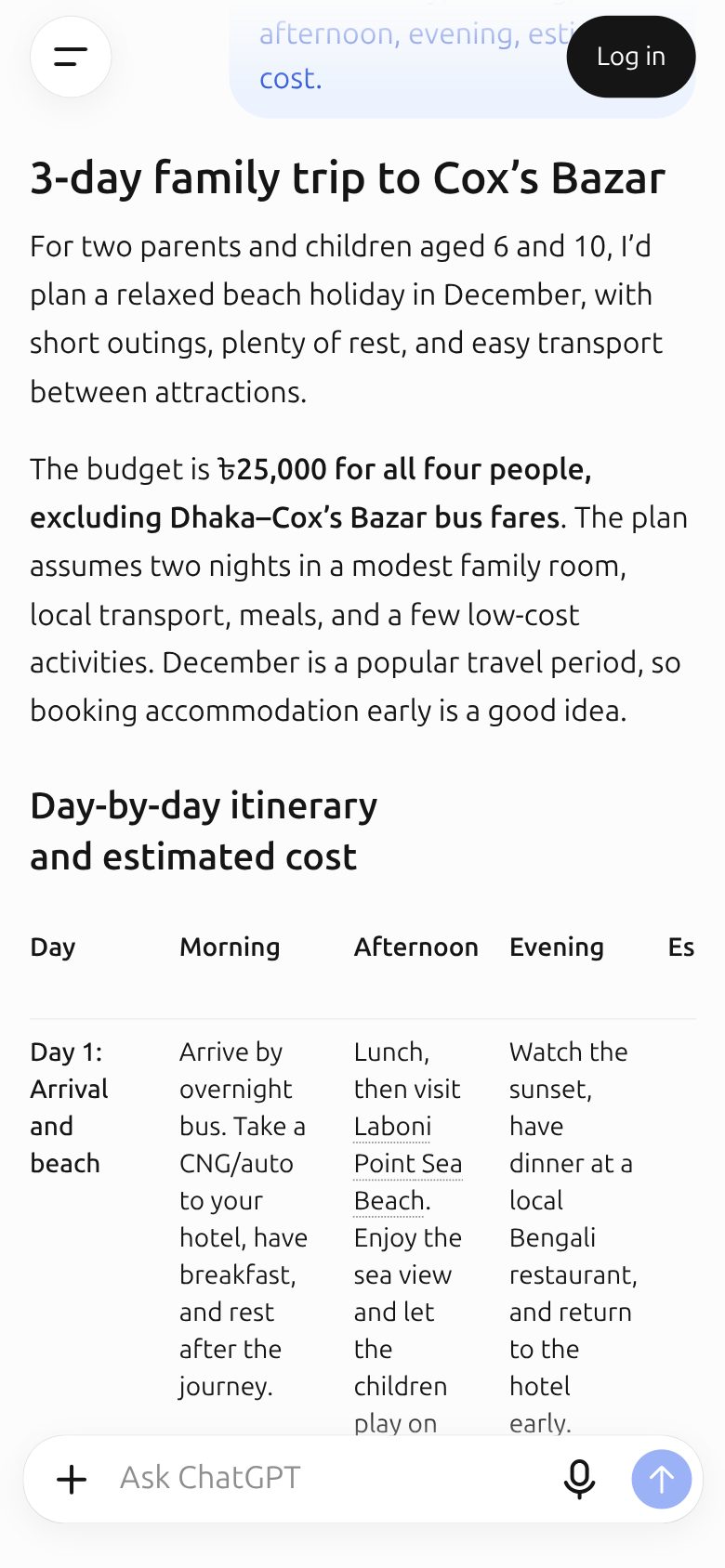
- 1Our facts and the table we asked for
Step 4: Change one part instead of rewriting everything
Say you don’t like the evening of day 2. You don’t need to write the whole prompt again. In the same conversation, say only what to change, and that the rest should stay:
Change the evening of day 2: the children go to bed early, so we want to be back at the hotel by 7 pm. Keep the rest of the table as it is.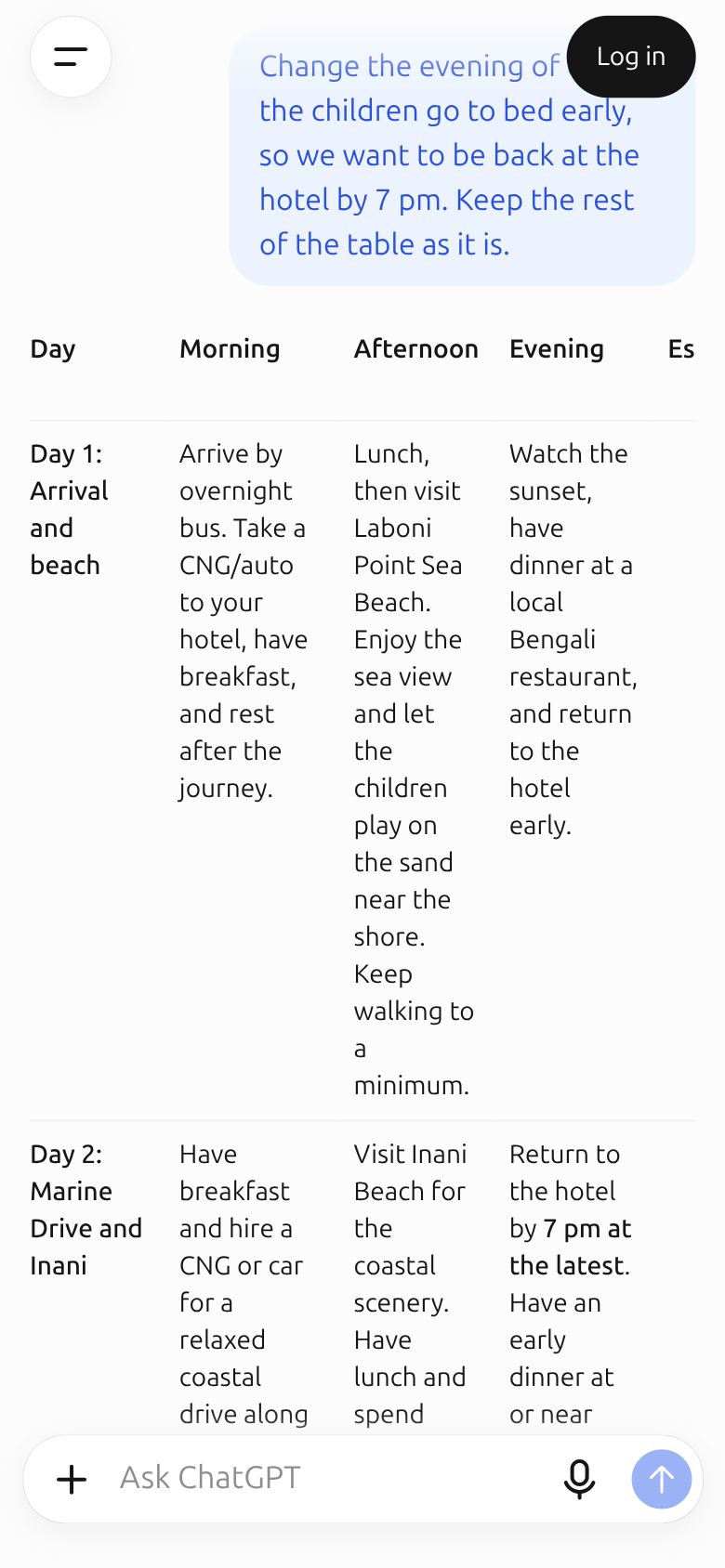
- 1The changed table: back at the hotel by 7 pm on day 2
Step 5: Do the sums yourself
In this run the numbers added up: ৳7,000 + ৳8,000 + ৳6,000 = ৳21,000, with ৳4,000 left for surprises. But when we ran the same test in Bangla, the day table came to ৳14,000 while the budget list under it said ৳25,000, and the two didn’t match. The same kind of prompt can give a different answer each time.
An AI makes neat tables, but its sums aren’t always right. And prices like hotel rates are its guesses, not today’s real prices. So:
- When there are numbers, add them up once yourself, or write “check the totals again and tell me where they differ”.
- Get hotel and bus prices from the booking site or by phone.
- Under this answer ChatGPT also showed a hotel booking ad, marked “Ad”. An ad is not part of the advice.
Sources
- Google, Prompting guide 101 (Gemini for Google Workspace, October 2024): the four parts (persona, task, context, format) and the 21-word figure.
- OpenAI Help Center, Prompt engineering best practices for ChatGPT: be clear and specific, and refine by looking at the answer.
- Anthropic, Prompting best practices: give the reason behind an instruction, and use examples.
Screenshots and steps checked: . AI answers can be wrong. For anything that matters, such as money, health, law or exams, always check against the original source or an expert. Never give any AI your password, PIN, national ID or bank details.